
Loading…
Dr. Yoon's Specialties:Dental Implants•Oral Surgery•TMJ Treatment
Dr. Yoon's Specialties:Dental Implants•Oral Surgery•TMJ Treatment
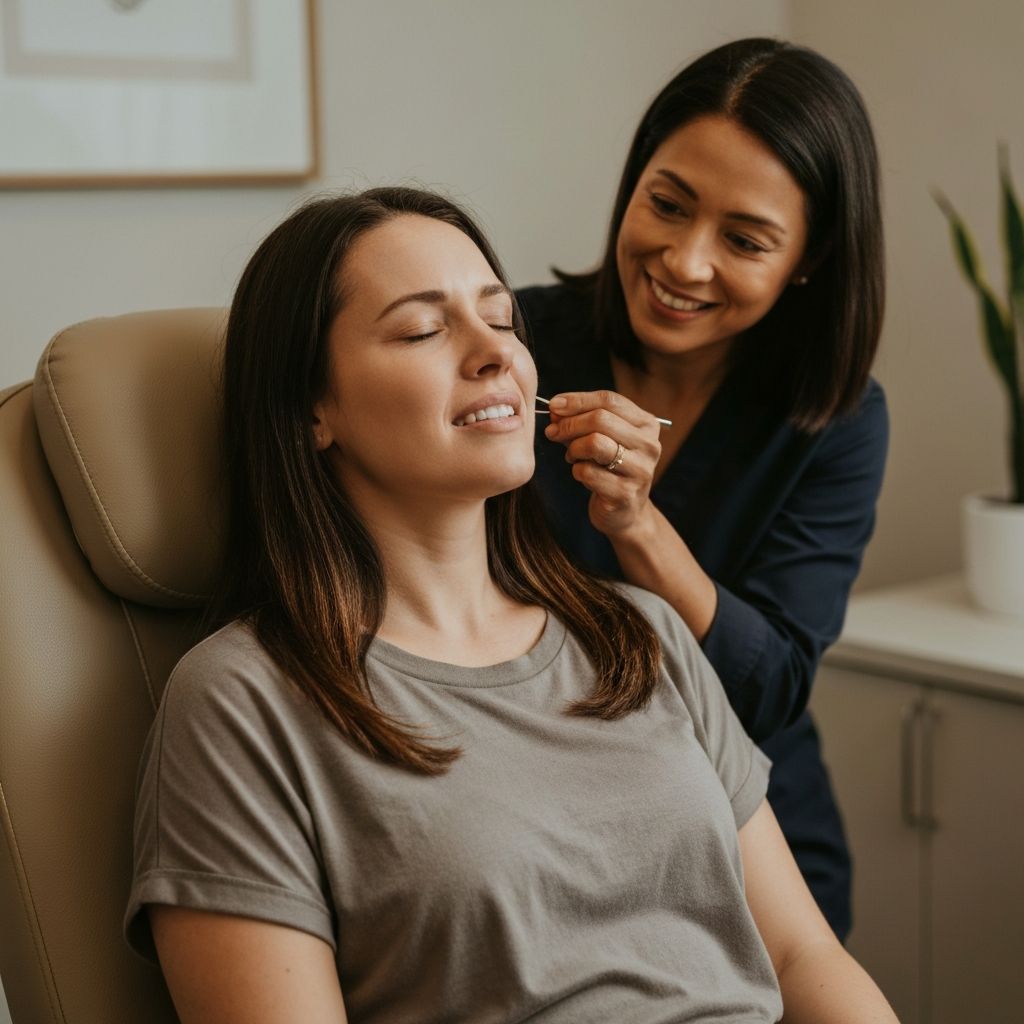
TMJ arthrocentesis is a minimally invasive procedure that flushes the temporomandibular joint (TMJ) with sterile saline solution to remove inflammatory debris, break up adhesions, and restore normal jaw function. Performed under local anesthesia through tiny needle punctures, this joint lavage technique provides relief for patients with persistent jaw pain, clicking, limited opening, or locked jaw (closed lock) who haven't responded adequately to conservative treatments like splint therapy. The procedure takes 20-30 minutes and has success rates of 70-90%.
At BK Dental, we offer TMJ arthrocentesis as an effective intermediate treatment option between conservative therapy and open joint surgery. This minimally invasive procedure can provide significant relief for patients with internal joint derangement, adhesions, or inflammatory conditions of the TMJ. Our experienced team performs arthrocentesis with precision technique, and we may combine the lavage with injection of anti-inflammatory medication or hyaluronic acid to enhance results. Many patients experience immediate improvement in jaw opening and reduction in pain following the procedure.
Book a ConsultationTMJ arthrocentesis (joint lavage) is a minimally invasive procedure designed to treat temporomandibular joint disorders when conservative treatments have not provided adequate relief. The technique involves inserting small needles into the upper compartment of the TMJ and flushing the joint space with sterile saline solution. This irrigation removes inflammatory mediators, cytokines, and debris that contribute to pain and dysfunction. The hydraulic pressure and flow of the lavage can also break up adhesions (scar-like tissue) within the joint that may be restricting normal disc movement and jaw opening. In some cases, medication such as corticosteroids or hyaluronic acid is injected into the joint after lavage to reduce inflammation or improve lubrication. Because arthrocentesis requires only small needle punctures rather than surgical incisions, recovery is quick and complications are rare. The procedure bridges the gap between conservative management (splints, physical therapy, medication) and more invasive surgical options, offering many patients significant relief with minimal intervention.
Comprehensive TMJ examination and imaging (panoramic X-ray, possibly MRI or CBCT) to assess joint condition and confirm arthrocentesis is appropriate. We review your symptoms, previous treatments, and medical history.
Local anesthesia is administered around the TMJ area to ensure comfort. For anxious patients, sedation options are available. The treatment area is cleaned and prepared using sterile technique.
Two small needles are precisely positioned into the upper compartment of the TMJ. Sterile saline solution is flushed through the joint, irrigating the space and removing inflammatory debris while breaking adhesions.
After lavage, medication such as corticosteroid (for inflammation) or hyaluronic acid (for lubrication) may be injected into the joint to enhance therapeutic effect and promote healing.
Needles are removed and the area is cleaned. You'll receive post-procedure instructions including soft diet recommendations, jaw exercises, and pain management. Follow-up appointment scheduled to assess results.
Recovery from TMJ arthrocentesis is typically quick and straightforward. The procedure site may be slightly tender, and you may experience mild swelling or bruising near the TMJ—this is normal and resolves within a few days. Many patients notice immediate improvement in jaw opening, though maximum benefit develops over 2-4 weeks as inflammation continues to decrease. A soft diet is recommended for the first 3-5 days to allow the joint to rest. Gentle jaw exercises prescribed by your dentist help maintain improved range of motion. Over-the-counter pain medication usually manages any post-procedure discomfort. Most patients return to desk work and light activities within 1-2 days. Strenuous jaw activities and hard/chewy foods should be avoided for about a week.
The cost of TMJ arthrocentesis varies based on factors including the complexity of your case, whether medication injection is included, and sedation requirements. While more involved than conservative treatments, arthrocentesis is significantly less costly than open joint surgery and can prevent the need for more invasive procedures. Some dental insurance plans provide coverage for TMJ procedures. Our team will provide a detailed estimate and help you understand your insurance benefits before treatment.

BK Dental offers TMJ arthrocentesis at both our Scarborough (416-490-1264) and Richmond Hill (905-889-4567) clinics. If conservative treatments like splint therapy haven't provided adequate relief for your jaw pain, clicking, or limited opening, arthrocentesis may be the next step in your treatment. We thoroughly evaluate each case to determine if joint lavage is appropriate for your specific condition. Schedule a TMJ consultation to discuss whether arthrocentesis can help restore your jaw function and quality of life.
Schedule your consultation today and take the first step toward better oral health.